
Of the seven members, four are proposed to be government nominees and the rest from RBI.

The time frame for this is difficult to specify and much depends on stability in the foreign exchange markets, Prime Minister's key economic advisor C Rangarajan said.

RBI's previous monetary policy was announced on September 29.

Faced with the challenging task of balancing growth and inflation, the Reserve Bank of India will take measures in its quarterly review later this month to perk up the economy and to control inflation, which rose to 0.83 per cent for the third week of September.

"Our endeavour is to bring headline inflation in line with the target over the medium term," said RBI Governor Sanjay Malhotra, addressing concerns about the central bank's policy stance and economic outlook.

Weighed down by a weak rupee, the Reserve Bank on Tuesday chose to keep all key interest rates unchanged and asked the government to take urgent steps to reign in the high current account deficit.

Indian stock market indices closed on a mixed note, with the Sensex gaining 374 points driven by buying in Reliance Industries and ICICI Bank, while the Nifty remained flat. This divergence is attributed to a new Closing Auction Session (CAS) mechanism introduced by stock exchanges, impacting market liquidity and price discovery.
The RBI's bi-monthly policy review on June 3 will be the first after Prime Minister Narendra Modi assumed office on May 26.

Investors should cap gold allocation at 10-15 per cent and consider staggered purchases through gold ETFs.

Reserve Bank of India (RBI) Governor Sanjay Malhotra stated that preventing second-round effects of supply shocks, where inflation expectations rise due to prolonged disruptions, is the primary role of monetary policy. He also defended the RBI's foreign exchange market interventions, asserting it did not commit to an 'indefensible peg'.
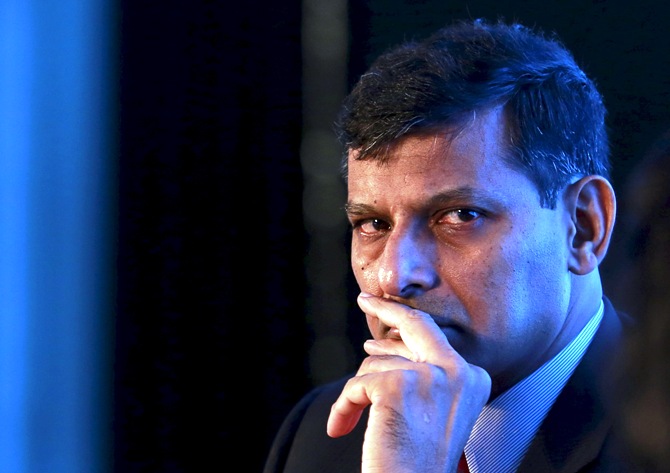
The policy will be presented in the backdrop of rising inflation.

Asked if the RBI will cut rates in its upcoming policy review, he said the central bank will definitely factor into account various developments and make an assessment of the macro economic conditions.

India's wholesale price inflation (WPI) increased to 9.87 per cent in June, up from 9.68 per cent in May, primarily due to significant price increases in non-food and food products, with food inflation alone rising to 5.49 per cent.

Reserve Bank Governor Sanjay Malhotra announced that India's foreign exchange reserves stand at a healthy $682.3 billion as of May 29, 2026, providing approximately 11 months of import cover and strong protection against external shocks.

The bank chiefs have also cancelled the customary media conference after the bi-annual policies.

Former Chief Economic Adviser Krishnamurthy V Subramanian outlines India's strategy to become a USD 55 trillion economy by 2047. The plan hinges on leveraging its young demographic in AI, dominating sunrise sectors like space and defence tech, attracting FDI, and achieving sustained 8% GDP growth.

"It is heartening to note that the RBI has chosen growth over monetary tightening and inflationary fears," FICCI president Harsh Pati Singhania said.

For India, the goal is not simply to host another grand diplomatic gathering. It is to prove that a diverse coalition of emerging powers can still deliver.

Indian benchmark indices Sensex and Nifty surged in early trade, driven by a rally in IT stocks and tempered expectations of US Federal Reserve monetary tightening following softer-than-expected US jobs data. Track Sensex, Nifty on July 3.

Remarks come at a time when he is under pressure from the govt to cut interest rates.
Uncertainties stemming from the West Asia crisis and its potential impact on inflation and economic growth were key factors in the Reserve Bank of India's Monetary Policy Committee (MPC) decision to maintain the status quo on interest rates, according to the recently released MPC meeting minutes.

The Monetary Policy Committee (MPC) is expected to maintain the status quo on policy rates for the fourth consecutive time in its October 4-6 review meeting. The incremental information available since its last meeting in August suggests that growth and inflation prints for the second quarter (Q2) of financial year 2023-24 (FY24) will exceed the committee's projections. However, the Consumer Price Index (CPI)-based inflation is expected to moderate in the second half (H2) of FY24.

The Reserve Bank of India (RBI) has prematurely closed its swap facility for foreign currency non-resident (bank) deposits, FCNR(B), one month ahead of schedule, after banks mobilised $52.3 billion under the scheme by August 13, indicating sufficient foreign currency reserves.

Markets will look for clear guidance on how the MPC interprets the uncertainty and what it implies for the future course of monetary policy, points out Rajeswari Sengupta.

RBI Governor flayed easy monetary policy of central banks in advanced economies saying it is "more cause than medicine".
Indian benchmark equity indices, Sensex and Nifty, extended their winning streak for a third consecutive day, driven by a rally in IT stocks and global cues suggesting a more accommodative monetary policy after softer-than-expected US jobs data.
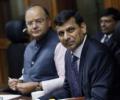
RBI Governor Raghuram Rajan has been pursuing hawkish monetary policy stance to keep inflation under check.
With inflation turning negative, industry has been demanding interest rate cuts to propel demand. However, RBI Governor D Subbarao had said there is no threat of deflation as food and crude oil prices are still firm.

The Reserve Bank of India's proposal to allow non-banking financial companies (NBFCs) access to the term money market is projected to significantly increase market volumes by 40-60 per cent in the first year, potentially doubling turnover within two to three years, according to treasury executives.
The Reserve Bank of India (RBI) has opted to keep its key interest rates unchanged at 5.25%, anticipating a global economic recovery following a ceasefire in the US/Israel-Iran conflict, despite ongoing inflationary pressures and currency fluctuations.

Tata Sons, the holding company of the Tata group, continues to be classified as an 'upper-layer non-banking financial company' (NBFC) by the Reserve Bank of India (RBI), despite its application to deregister as an NBFC-Core Investment Company (CIC) remaining under consideration. This classification subjects it to enhanced regulation and a mandatory listing requirement, which remains uncertain.

India and China are in what experts call 'a cooperation-versus-competition situation'.

The RBI has hiked repo or short-term lending rate up by 0.25 pc to 7.75 pc.
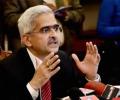
Following are the highlights of the RBI's first monetary policy statement of 2022-23 unveiled by Governor Shaktikanta Das: Policy repo rate unchanged at 4%; marginal standing facility rate & bank rate too remain unchanged at 4.25%. Monetary stance to be accommodative with focus on withdrawal of accommodation to keep inflation within target. GDP growth projection for FY'23 slashed to 7.2% from 7.8%; growth projections based on assumption of crude oil (Indian basket) price at $100 a barrel during FY'23. Inflation forecast hiked to 5.7% for FY'23 from 4.5%.

The RBI once again said the Tata group holding company's application for deregistration as an NBFC remains under examination.

The Reserve Bank of India (RBI) Governor Sanjay Malhotra is now confronting the classic growth-inflation tradeoff, a situation exacerbated by the West Asia war, which threatens to end the 'goldilocks period' of low inflation and robust growth.
Highlights of the third quarter review of the monetary
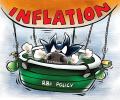
The Reserve Bank of India has increased its retail inflation projection for 2026-27 to 5.1 per cent, up from an earlier estimate of 4.6 per cent. This revision is primarily attributed to mounting input costs, driven by the pass-through of higher global energy prices to domestic petrol and diesel rates, which have seen significant increases since May.

Moody's Analytics predicts India will remain the fastest-growing major economy in 2026 and 2027, but its pace will moderate due to a global slowdown, geopolitical risks, and financial market volatility, despite the boost from AI demand.
